Street Special: streets around the Forbidden City
Part of Imperial City Wall still remains standing along the Chang'an Avenue. A walk along the red wall that was once reserved for the royals, along the pedestrian sidewalk beneath the Chinese Parasol trees is very enjoyable. An even greater luxury though, is a nap on one of the long chairs.
It's hard to imagine that this area used to be strictly forbidden, just for the royal family. It connects to a third street that witnessed the most turbulent period in China’s history, Wusi Street, May 4.
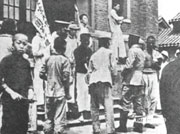
Wusi means May 4 and it is named for one of the most important developments in modern Chinese history. At the beginning of the 20th century, morale in the country had sunk low. People had suffered much from foreign bullies and domestic turmoil. Then into this despair marched the May Fourth Movement - a patriotic campaign that advocated democracy and scientific development. The ideals of the May Fourth Movement brought fresh air into a decaying society bogged down in feudal decadence.
In 1919, the First World War ended with the defeat of Germany. But when the Paris meeting decided to transfer Germany's special privileges in the Chinese city of Qingdao, to Japan, the decision outraged every person in China.
Every one is very angry with the news. They must return out Qinghao. This is way too much. We will let them know what we think of it.
It was the particular anger of a group of young students that triggered a nation wide movement involving large strikes and demonstrations. The May Fourth Movement heralded the awakening of a patriotism and nationalism that led to more stormy revolutions that eventually revamped the nation.
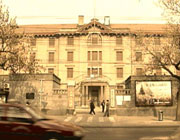
Students from over a dozen colleges took part in the demonstration and the initiator of the demonstration was students from this university. They probably set off to the meeting from this gate.
The Red Mansion is the old campus of Peking University. Its austere look only increases it's prestige. It was not by coincidence that the students from Peking University initiated the demonstration. This school housed a number of distinguished intellectuals who wanted a new future for their country. They dreamed of building a new China, to bring freedom to the Chinese people. Li Dazhao who was in charge of the library at Peking University, was one of the earliest Communist Party members. So was Chen Duxiu, the founder of the "New Youth" periodical that became the flagship of freedom and democracy. These men, and many other now famous names, were on the payroll here.
Everyone of the teachers occupies a special position in their discipline.
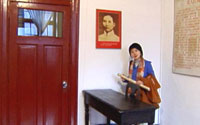
From October 1918 to March 1919, Mao Zedong, now we call him Chairman Mao, worked here as a librarian. This was his first job after he landed in Beijing, a young man full of aspiration.